
The US has launched “self-defense strikes” against Iran after Donald Trump blamed Tehran for downing a US army helicopter near the Strait of Hormuz, imperilling a shaky ceasefire that was announced by the two countries in April.
US Central Command (Centcom) said Trump had directed the military to launch strikes on Tuesday in response to the downing of the US army Apache helicopter gunship off the coast of Oman earlier on Tuesday.
US media citing White House officials have said that the US is targeting radar and air defence facilities along the strait of Hormuz.
Trump had said in a post on his Truth Social platform that Iran was responsible for the crash, and that Washington could not allow such an event to go unanswered.
READ MORE




At the same time, US officials also signalled that they were not seeking a return to full-scale war with Iran. “The mission is a proportional response to unjustified Iranian aggression,” Centcom said. Tehran has not yet indicated whether it is planning its own retaliation.
The helicopter’s two crew members were later rescued in an unprecedented operation using an unmanned drone boat, the US military said.
Trump played down the incident in an interview with the Wall Street Journal, saying that the strike on the helicopter “wasn’t a big deal” and that the “pilot is fine”.
The helicopter went down as the Middle East was still reeling after Iran and Israel exchanged fire on Monday in the biggest blow yet to the strained ceasefire in the Iran war. Iranian state television reported on Tuesday that the Israeli attacks killed at least two members of the country’s air defence units.

The shooting-down of the helicopter came hours after the president intervened to halt an escalatory cycle of tit-for-tat attacks between Iran and Israel that threatened to reignite a full-blown war in the Middle East.
Trump has repeatedly said Washington and Tehran are closing in on a deal to extend their April 8th ceasefire, reopen the strait and set a framework for talks on Iran’s nuclear programme.

Oil prices rose from a seven-week low following Trump’s threat to respond to the attack, trimming Brent crude’s loss for the day to 3 per cent, leaving it at $91.45 a barrel at settlement time on Tuesday afternoon.
Iran has slowed the flow of traffic through the strait – through which about a fifth of the world’s oil and gas typically passes – to a trickle since the US and Israel launched their war against the Islamic republic on February 28th. That has triggered the worst global energy crisis in decades, pushing up prices at US petrol pumps in advance of the critical midterm elections in November.
The US Navy has also imposed a blockade on Iranian ports as the narrow waterway has become a crucial theatre of contestation.
A US official said the two-person crew of the Apache helicopter climbed into an unmanned surface vessel before being transferred to a medical facility.
[ Israel and Iran halt their most direct confrontation since AprilOpens in new window ]
Clashes between Iran and Israel had erupted on Sunday after the Islamic republic launched missiles in retaliation for Israeli strikes on a building in the southern suburbs of Beirut, a stronghold of Hizbullah, the Iran-backed Lebanese militant group.
Israel responded by conducting what it said was a “large-scale strike” on “strategic defence systems” in Iran and bombing several targets at a petrochemical plant in Mahshahr in southern Iran.
But both sides halted their fire after Trump told them to stop shooting and called Israeli prime minister Binyamin Netanyahu, pressuring him to end the strikes on Iran.
The Israeli-Hizbullah conflict has become another issue complicating diplomatic efforts to seal a deal between the US and Iran, as Tehran insists it should be part of a broader ceasefire agreement.
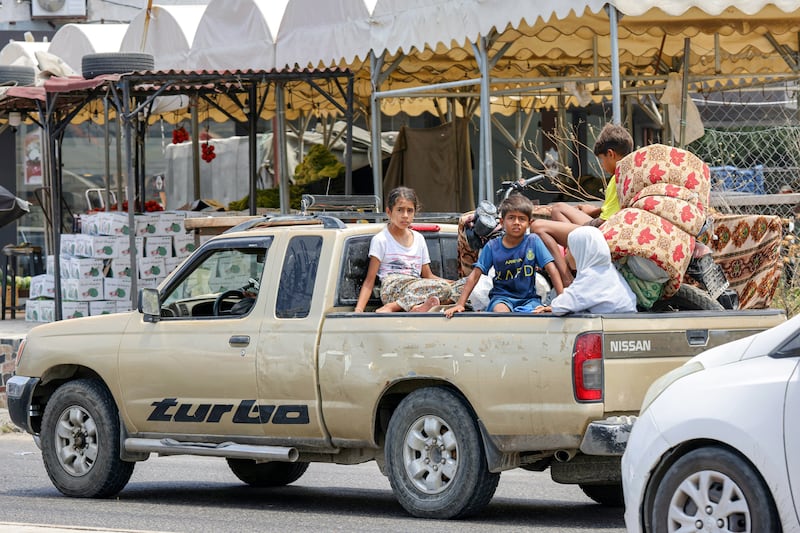
Israel continued striking southern Lebanon on Tuesday, including bombing the historic port city of Tyre, killing at least eight people, the Lebanese health ministry said.
Hizbullah, which triggered the latest conflict by firing across the border after the Iran war erupted in February, continued to battle Israeli troops inside Lebanon. – The Financial Times Limited 2026 and The Guardian
[ Why Netanyahu defied Trump and retaliated against IranOpens in new window ]


