

Ireland is a filthy rich country – at least judging by the State’s top-line revenues. We bring in an extraordinary amount of tax revenues from companies that generate income elsewhere, giving us outsize financial reserves.
But look beyond the headline figures and you’ll discover something else: strip out the multinational “windfalls” and public spending exceeds revenue by more than €11 billion.
Put another way, not only are we spending instead of investing the proceeds of an economic miracle, but we are also using a likely temporary revenue stream to sustain permanent spending commitments – which are growing, year on year.
The Irish Fiscal Advisory Council has warned the Government about this repeatedly, while the Central Bank’s projections are also sobering. Yet we still find ourselves drunk on short-term energy credits, fuel subsidies, Christmas bonuses, one-off cost-of-living payments, VAT relief for restaurants, bike sheds, runaway health spending and electric buses that can’t be charged.
READ MORE


It is an extraordinary situation for a country such as Ireland. We are a famous rags-to-riches success story, whose entire economic model is predicated on manipulating the complex maths of international tax and accounting. Despite this, we seem unable to manage the more basic maths behind running a state.
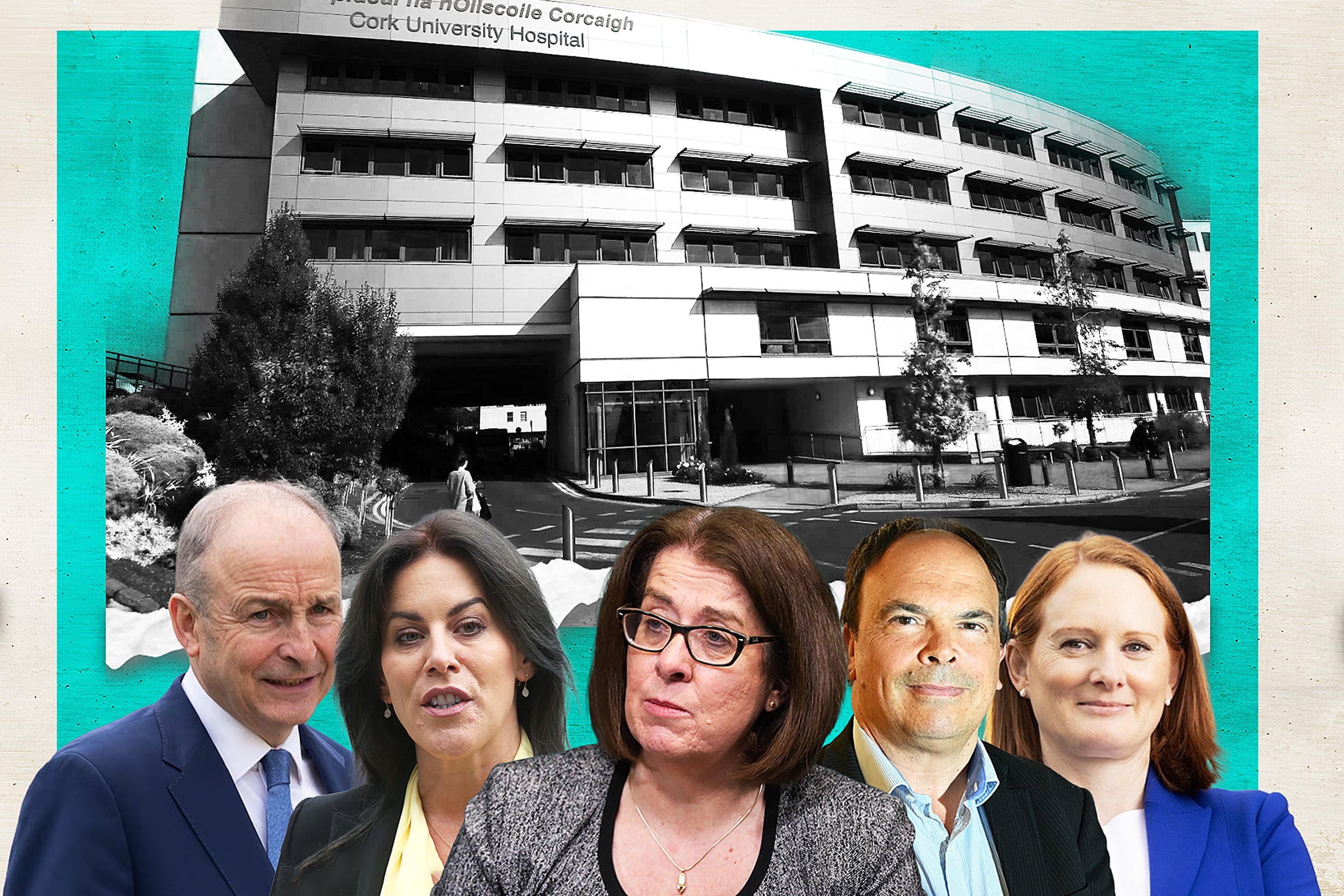
Against this backdrop comes the Government’s decision to give an additional €1.7 billion of funding to departments and public bodies that have overspent their approved budgets, with the HSE alone getting an additional €780 million on top of its approved €29 billion for this year.
What makes this remarkable is that this news is entirely unremarkable. The bailout to health would have been a short-lived item on the news were it not for the abrupt sacking of Anne O’Connor, the HSE’s chief executive, drawing attention to the question of who is responsible for the health service’s chronic overspending. But this isn’t exactly a new problem that began with the current leadership.
In July 2023 then-minister for public expenditure Paschal Donohoe declared that large overspends in the Department of Health could not continue. The department, he said, had needed supplementary funding every year he could remember. This had to stop.
In 2024 new spending controls and hiring restrictions were introduced to end the HSE’s deficits. By November its board was already warning that further controls might be needed. Rather than fundamentally rethinking how the health service was managed, though, the Government simply repeated the message in 2025 – this time, more sternly.
In February 2026 Tánaiste and Minister for Finance Simon Harris reiterated that spending ceilings would be binding. By May Minister for Public Expenditure Jack Chambers had introduced yet another expenditure escalation process, threatening tight supervision of departments that had not complied.
While the message is more forceful and involves more complex oversight, the Government still relies on the only tool it appears to have to control spending: to demand discipline and hope that this time the departments have been listening.
But they did not listen. Their failure to listen equated to a €1.7 billion overspend.
I could invoke the definition of insanity as doing the same thing and expecting different outcomes, but that trope is as boring as watching the same Government failures unfold year after year. Ministers slam their fists on lecterns as they announce new controls and threaten that this time things will be different.
A lack of political imagination means that Harris can insist that spending ceilings will be binding as he breaks them, and Chambers can reportedly berate officials, announce that the era of endless recruitment is over and impose another round of hiring restrictions. Minister for Health Jennifer Carroll MacNeill can “accept and support” the firing of the HSE chief executive. But if we’re going to engage in stagecraft instead of statecraft, can’t we at least update the script?
Ireland has been freezing public sector recruitment for almost two decades. These tired spending controls do little to address the underlying problems in how the State manages its workforce and delivers public services.
It’s time to get rid of the announcements of reform, and bring in reform itself. We don’t need another spending review to merely serve the purpose of pretending that our chronic overspending is being addressed. As we head into peak pantomime season, it is beginning to feel like the Government has spent too much time at the Gaiety. The public cries out, endlessly, that the system isn’t working, to which they shout back angrily: “Oh yes it is!”
But this isn’t a pantomime. The money is real and the consequences are costing us dearly, both fiscally and in the quality of our human lives. To get a better understanding of this, let’s look at how the Irish State delivers public services. This increasingly happens through a sprawling network of external organisations, voluntary bodies, private providers, contractors and semi-State agencies, rather than through organisations it directly controls.
Healthcare gives us an eye-opening example of what this looks like.
In 2024 the HSE deployed about €7.7 billion in grant funding to outside agencies, all of which play an integral part in the delivery architecture of the Irish health service.
Yet at the same time, the Comptroller and Auditor General highlighted significant weaknesses in the HSE’s oversight of this funding. By the end of 2024 only 74 per cent of the funding distributed to these agencies was covered by a completed funding agreement. Warning that these arrangements undermined the HSE’s ability to hold funded organisations accountable for their performance, the auditor highlighted the need for reform.
This means the Government has ended up with a fragmented and complex delivery network, and it has not developed the capacity to govern it.
And think about how somebody might manage a budget in the first place: you need to know what services are being delivered, by whom, and at what cost. In other words, you need reliable data about productivity and future spending commitments – ideally in a way that allows you to identify problems before they become financial liabilities.
This requires operational oversight, not just financial oversight.
A Government or department insisting on spending ceilings can’t enforce restraint without a clear picture of how an organisation is spending their money. Nor will more stringent reporting requirements improve management if the IT systems are inadequate.
This is the difference between controlling a budget and controlling the system that generates the budget.
Without structural reform, this column will be written again and again in the coming years. It is the inevitable outcome of the Government treating symptoms while leaving the underlying structure the same. And until that time, ministers will continue to perform their indignation at each new overspend, as though this is a problem of departments not listening rather than the failure to reform how the State works.