
Something unprecedented happened on the outskirts of Waterford city in the early 2000s – a €200 million road was rerouted due to the discovery of a Viking settlement in 2003.
The N25 Waterford city bypass, already half-built, was abandoned, and another built, to avoid the destruction of the site.
Described at the time by Prof Donnchadh Ó Corrain of the department of history at University College Cork as “the most significant new find in Viking studies in perhaps a century” the empty field may have once been a bustling village made up of more than 60 houses.
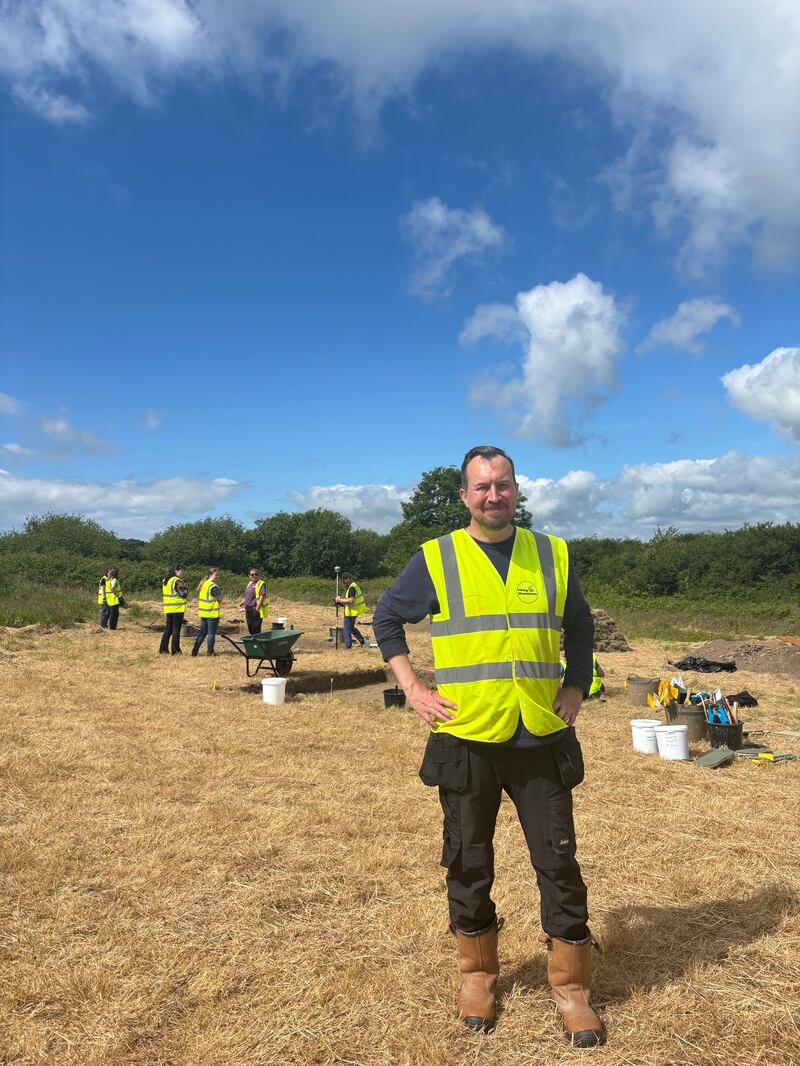
This June, a weeklong dig was carried out on the site to discover more information on this mysterious village, lost to time for so many centuries.
READ MORE


“This would have been a thriving, bustling settlement,” said Neil Jackman, director of the latest dig at the Woodstown Viking site. “There would have been the noise of metalworking going on, there would have been chickens and pigs roaming around, kids playing, families squabbling, all the usual things you’d associate with a busy village.”
Surveys led the team of archaeologists at Woodstown to believe there could have been as many as 61 houses in the settlement at one time.
What makes the discovery of this site so important internationally is that, for some reason – the archaeologists are not sure why – the site was abandoned. Unlike Dublin and Waterford city itself, the Viking settlement at Woodstown didn’t develop into a major urban area. Instead it lay untouched for centuries with nothing being built on top of it.
“It got left in time,” said Jackman.
In a way, the discovery is almost akin to that of Pompeii. Where other Viking sites have been contaminated with hundreds of years of buildings constructed and human lives lived atop the sites, Woodstown has not been inhabited since the Vikings, meaning the entire original settlement is completely preserved, just a few inches below the surface.
During the dig the team found evidence of a structure twice the size of any other building found in Woodstown. It is “significantly bigger than any other building found in Ireland in a Viking context”, Jackman said.
Carbon dating could take six to 12 months, but Jackman believes his team has found evidence of a Viking long hall in Ireland.
Such long halls, common in Scandinavia, may have existed in Viking settlements such as Waterford and Dublin without being found.
It points to a role for Woodstown not as a temporary raiding camp but as something more akin to Jamestown, the first permanent English colony in the United States, later abandoned.
Fragments of soapstone found in the long hall reinforce this theory. The stone, used to make cooking vessels, is rare in Ireland. “It’s as good as a ‘made in Norway’ stamp,” said Jackman. It also points to possible domestic use for the building.
[ Woodstown: A Viking Age settlement in Co WaterfordOpens in new window ]
The fact that the Vikings brought bulky items such as cookware with them from Norway on a longboat where space was precious suggests an intention to settle.

Among other finds was a silver coin originally probably from the Umayyad caliphate in Wasit, Iraq, dating to 700 AD. “This shows the trade extent of the Vikings,” Jackman said.
“It probably travelled a long way and passed through many, many hands before it ended up in a wet field in Waterford about 100 years after it was first made.”
Arabic coins were popular among the Vikings due to good silver content. As well as evidence of trading there were signs of raiding found on the site.
A copper alloy mount with insular Irish art on it was found – presumably stolen from a monastery. It may have formed part of the abbot’s horse’s harness, or it could have belonged to a reliquary.
“It was prised off by the Vikings during a raid, and what is really exciting about that is that very similar objects turn up regularly in the graves of Viking women in the southwest of Norway. So these pieces of decoration from an early Irish church or monastery get transformed into jewellery, and must then have been worn by high-status women to show that their family is in Ireland.
“What they were doing was they were taking these pieces of metalwork, recognising them as beautiful and transforming them from religious objects into jewellery.
“In a way, it’s almost like a souvenir that the guys are bringing back after a raid.”
The excavation was funded and supported by the Royal Irish Academy, the National Monuments Service and Waterford City and County Council. It involved archaeologists from Abarta Heritage, the Discovery Programme, and the University and Museum of Stavanger.
Those in the field know they have all the time in the world.
Waterford City and County Council had a conservation management plan produced, which proposes to use an experimental form of archaeology: using only the tools and materials available to the Vikings at the time, to recreate the historic site.
“You can imagine what a landmark that would be: an authentic Viking village, built exactly as the evidence tells us – this isn’t a Viking Disneyland by any means – built right on the water. That’s the vision,” Jackman said.
Woodstown’s invisibility, with wooden structures remaining only as foundations, poses a problem when it comes to public awareness. Jackman said: “What do you do when you have the country’s most important archaeological site but it’s invisible? How do you make it real? How do you tell that story?
“It’s as important as Newgrange but it’s intangible.”


