
When, in mid-May, Evanna Lynch arrived in Cork, a city she hadn’t spent much time visiting while growing up in Termonfeckin, in Co Louth, or since moving to London, she landed with a particular reference in mind. Nine years ago she starred in a well-regarded production of Disco Pigs, the most emblematic of Cork plays, that ran in London and New York.
Anyone who hadn’t seen Lynch since her performances as a benevolent young witch in four Harry Potter movies between 2007 and 2011 might have been surprised to see her in Enda Walsh’s unflinching work of in-yer-face theatre, playing a self-invented teenager from a council estate who rampages through shops, pubs and clubs, ruling the city through intimidation.
Nowadays Lynch is walking the sloping streets of the real Cork, back and forth to the Everyman theatre, where she is in rehearsals for an anticipated production of Pool (No Water), a darkly unsettling play by the British writer Mark Ravenhill.
“There’s a bridge here where there’s a bunch of teenagers who are so confident,” she says. “They talk so loud. They’re all smoking. Sometimes, a few years after a project, you’ll think, ‘That’s what that meant.’ I had that a little bit when I saw those teenagers.”
READ MORE


The Everyman’s decision to cast Lynch in the play is ingenious. First seen in Plymouth, in England, in 2006, and set in an avant-garde visual-arts world – hence Ravenhill’s cockeyed title, like something you’d read on a gallery label – it’s about simmering professional jealousies and the distortions of fame.
Lynch plays one of a group of artists who question their lives and purpose during a reunion with a peer whose career has gone stratospheric. It’s an ascension into fandom that Lynch knows something about.
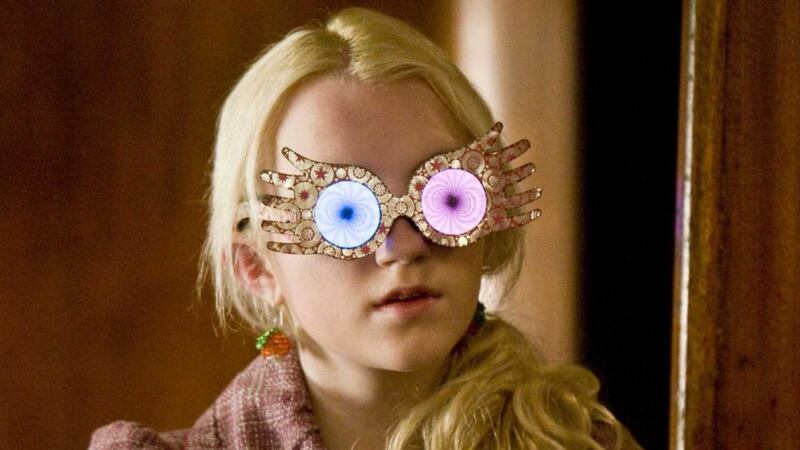
She inhabits a particular place in the Irish imagination as someone who as an unknown 14-year-old, in early 2006, beat 15,000 others at an open audition for the Harry Potter film series, in which she played the oddball teen Luna Lovegood. It might have seemed as if we were witnessing a child live out her dream in real time.
The reality was startlingly different. Three years earlier, in June 2003, when she was 11, Lynch featured in the Irish Independent in a piece that explained she’d been allowed out of Our Lady of Lourdes Hospital, in Drogheda, for an hour to collect a signed copy of Harry Potter and the Order of the Phoenix, the fifth novel in the series, which had been published that day. Later, during production of the films, there were whispers about Warner Bros employing an anorexic teenager.
The following year, Lynch later told another interviewer, she wrote a fan letter to JK Rowling, the Harry Potter author. Lynch had been in hospital for five weeks, having been admitted by her parents, who had grown desperate after seeing their daughter restrict her food intake and become underweight, and not make progress with a dietitian and a therapist. Lynch told Rowling that she had an eating disorder and that reading Harry Potter helped take her mind off it.
“Sometimes journalists would paint a picture of me going straight from a hospital bed on to the Harry Potter set,” she says. “It didn’t save me. I had to choose to save myself before that.”
In The Opposite of Butterfly Hunting, her memoir from 2021, Lynch makes clear that performance provided a harbour, and was something she felt the need to protect.
[ Evanna Lynch: I never planned for anorexia to be my thingOpens in new window ]
She had taken drama classes at Little Duke Theatre, in Drogheda, and became ambitious about securing the role of Luna Lovegood in the Harry Potter book she had read in hospital, perfecting her delivery: a curious expression of blank aloofness; a gentle singsong intonation.
It was a specific goal, one forged during her recovery, but Lynch admits that after Harry Potter she had to grapple with a competitive industry. “I had this weird idea that the only way I could get the role of Luna, or deserve it, was to convince everyone I was her, which worked to an extent. Then I had to convince people I’m an actor,” she says.
Her next role was in a play about Houdini – another project about magic – that slyly cast her as the escapologist’s wife. The production, which toured Britain and Ireland, struggled with its own illusions. (“At one point I had to pretend an empty water tank was full when it was empty because the stage couldn’t support it,” she told The Irish Times in 2016.)
There was a five-year period living in Los Angeles, where Lynch had “a handful of movies and shorts”, including the spiky comedy GBF (the initials stand for gay best friend), in which she played a scowling Utah Mormon protesting her high school’s anti-prom.
An Irish feature, Simon Fitzmaurice’s reaffirming road movie My Name Is Emily, saw her play a straight-talking schoolgirl in search of her father after he has a manic episode, a role allowing for her deadpan delivery.
Lynch relocated to London, where she started acting more regularly in plays. “When I left Harry Potter, the thing that was tricky was I had a huge profile but quite limited experience. I feel like theatre is where you make up for that.”
After Disco Pigs came The Omission of the Family Coleman, a comedy adapted from the Argentinian original by the Irish playwright Stella Feehily, in which Lynch played a thrifty kid eager to escape a dysfunctional 1970s Dublin household. She also played the lead in Tim Edge’s thriller Under the Black Rock, playing a young avenger in Belfast during The Troubles.
During production of the Harry Potter films, Lynch took up classes in dance, and considered a career in it. (She was good enough to place third in the US version of Dancing with the Stars in 2018.) She wrote in her memoir about how dance (and, later, circus) provided an alternative relationship with her body than the one imposed by her eating disorder.
Disco Pigs is also usually choreographic and kinetic when staged. Might whirlingly physical plays also do something for her?
“I just love movement. It gets me out of my head. I’m a very in-my-head person,” she says. “If the performance is very physically involving, I can’t overthink it.”
When I pulled away, there were some people who clung on a bit too hard
— Evanna Lynch
When she discovered the avant-garde performances of the Irish dancer Lucia Joyce, daughter of James Joyce, whose work was seen in France, Italy and Germany in the 1920s, Lynch saw a poignant parallel with her own history of mental illness.
Joyce was admitted to an asylum when she was 25, and lived in psychiatric facilities for many years, largely cut off from family after her father’s death. When she died her letters and projects were destroyed by the executor of her father’s estate.
“I read about her and think with another set of parents, in another time and place, I would have been medicated and dismissed as mad,” Lynch says.
She spent years intent on making a feature film in which she would play Lucia Joyce. The project got as far as being presented at the European Film Market trade fair in 2023, but it didn’t secure a buyer. The following year the director attached to the film, Robert Mullan, died. Lynch was despondent. She decided to quit for a year.
Pool (No Water), which the Everyman is staging as part of Cork Midsummer Festival, has lured her back to performance. The promise of a physical-theatre production was a big part of the attraction.
Like Enda Walsh, Ravenhill created provocative, boundary-pushing theatre in the 1990s, especially his extraordinary breakout play, Shopping and F**king. By the mid-2000s he was searching for new forms. He conceived Pool (No Water) for Frantic Assembly, pioneers in the UK’s physical-theatre world. (The same scene produced Lovesong, by Abi Morgan, which the Gate Theatre staged in Dublin in 2025.)

Staying true to the play’s DNA, the Everyman has recruited the choreographer Luke Murphy, creator of the dance blockbuster Scorched Earth and a regular performer with Punchdrunk, a British theatre company specialising in promenade plays that take over multistorey venues.
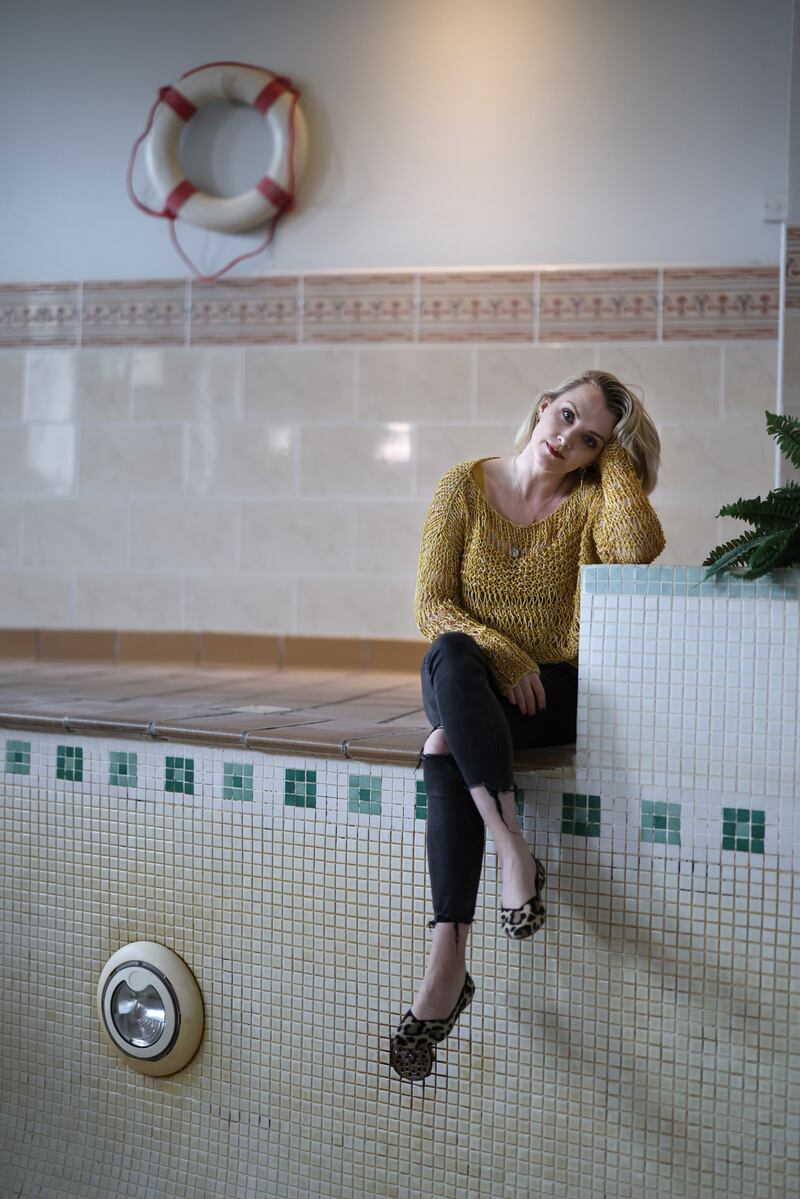
There is a hint of Punchdrunk’s approach in Pool (No Water): the production will rove through a former leisure centre and swimming pool that has been sitting dormant beneath the Metropole Hotel for a few years.
The visual-art world in Ravenhill’s play is aggressively non-utilitarian and eye-wateringly expensive, recalling the Young British Artists Damien Hirst and Tracey Emin. At its centre is the (unseen) peer who recently has become staggeringly famous.
What was Lynch’s initial experience of fame? It didn’t upend her life in Termonfeckin when she was 14, she says: “When the news broke there were a couple of days of ‘Oh, my God, you’re interesting!’ and then it was, like, ‘Oh wait, you’re exactly the f**king same.”
In recent years she has felt more mistrustful of relationships, and decided to distance herself from some of those in her life. “When I pulled away, there were some people who clung on a bit too hard. I feel that’s more about fame than it is about friendship.
“I had someone I was close to who was very famous, and it was hard to know where you stood with them,” she says. “I think they were very afraid about who to let close to them.”
The other actors in Pool (No Water) think the famous artist in the play was just lucky that she succeeded, but Lynch disagrees: “I don’t think she’s a better artist, but I think people who are single-minded and don’t doubt themselves do go very far. It’s bigger than talent in determining success.”
That comes from someone with a lot of experience of a competitive industry. Someone who respects a good hustle when she sees it.
Pool (No Water), staged by the Everyman at the swimming pool on St Patrick’s Quay (beneath the Metropole Hotel) as part of Cork Midsummer Festival, previews from Friday, June 12th. It opens on Wednesday, June 17th, then runs until Saturday, June 27th


