

Saying you will do something and then not following through is a mug’s game. Parents know it, teachers too, but rugby referees have been slow to learn that the statement is an absolute truism.
Former South African referee Tappe Henning, now in charge of the URC referees, announced recently that backchat to referees would no longer be tolerated. It was a welcome statement. It came after all 18 rounds had been played, so it was overdue, but better late than never.
Hollie Davidson needed to apply that zero-tolerance approach during Leinster v Stormers at the Aviva Stadium last Saturday. Instead, she unwisely permitted constant questioning of her decisions. It was unsettling and while the World Cup remains in her sights, she is not yet on the plane. There is work to be done.

Leinster into another final, but are their fans buying into their URC run?
The match saw a horrible clearout of Rónan Kelleher by Ruan Ackermann. It was a hard shoulder at maximum force, directly to the hooker’s head. Davidson sent it for review. But the offence was screaming for a straight, permanent red card, delivered by the referee herself. It was of course upgraded to a 20-minute red, but justice was not done. If this extremely high level of danger is only yellow, then the game has a huge problem.
READ MORE


For just an extra 10 minutes with 14 players, it is effectively a licence to assault. It also does nought for player welfare in terms of brain injury. Those who support the 20-minute red for such atrocious behaviour need a serious rethink.
The undertones in this encounter were confirmed at half-time by an unacceptable fracas in the tunnel. Just where is rugby going?
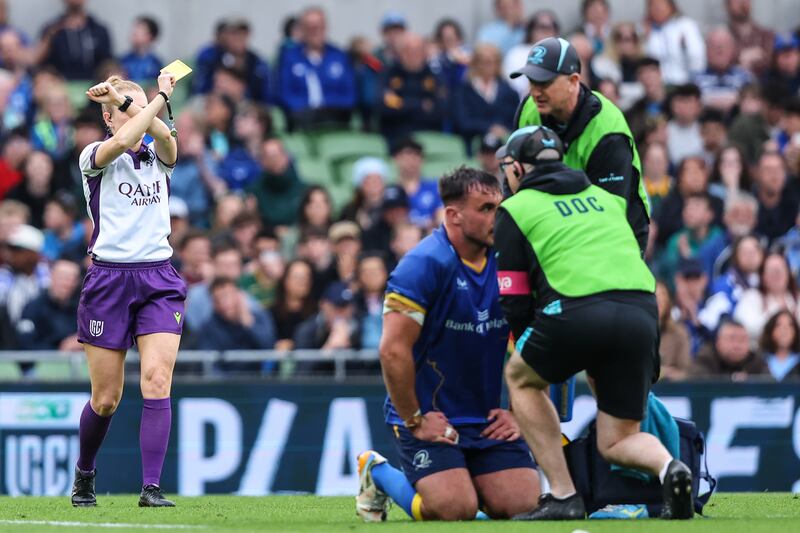
At about the hour mark, Davidson complained that her decisions were being frequently challenged. It was too little too late. The two skippers, Caelan Doris and Ruhan Nel, were also in her ear incessantly. All a referee should need to do is give a clear reason for a sanction, as in “the penalty was for your number three being offside”.
Allowing a captain to open a debate on the merits of that decision is a step too far. Captains do not expect a decision to be changed, but they are attempting to create doubt in the referee’s head for the next time – an outcome which is all too achievable.
It must have been deeply satisfying for Jamison Gibson-Park to score the very fine try that put the match beyond the visitors’ reach. The scrumhalf was skittled without the ball several times, most notably just before Stormers’ Adré Smith touched down. You can’t do much defending when you’re dumped out of the game. Davidson and her TMO Mike Adamson failed to notice it.
Having awarded the Gibson-Park try, the officials decided to examine a potential offence by Salmaan Moerat in the preceding breakdown. It was a big call to judge that he had intentionally played the ball with his foot – definitely not in the clear-and-obvious category. The yellow card was harsh and unnecessary.
The first semi-final saw a remarkable comeback by the Bulls against Glasgow. From 3-21, the visitors owned the ball in the second half, carving out a solitary-point victory, 22-21. They were even able to afford Handré Pollard’s off-colour goal-kicking display as he put the ball everywhere except through the posts.
Ireland’s Andrew Brace delivered a welcome, authoritative refereeing performance. This included actually adding 10 metres to a penalty offence for dissent. Glasgow may have a few issues to discuss, but they’ll know they really need to look at their own second-half performance, not that of the referee.
It looks likely that it will be the Italian referee, Andrea Piardi, for the final. How he deals with decisions being challenged will be very interesting. If a sanction for backchat were to decide the outcome, no blame could be attached to him. Don’t shoot the messenger.
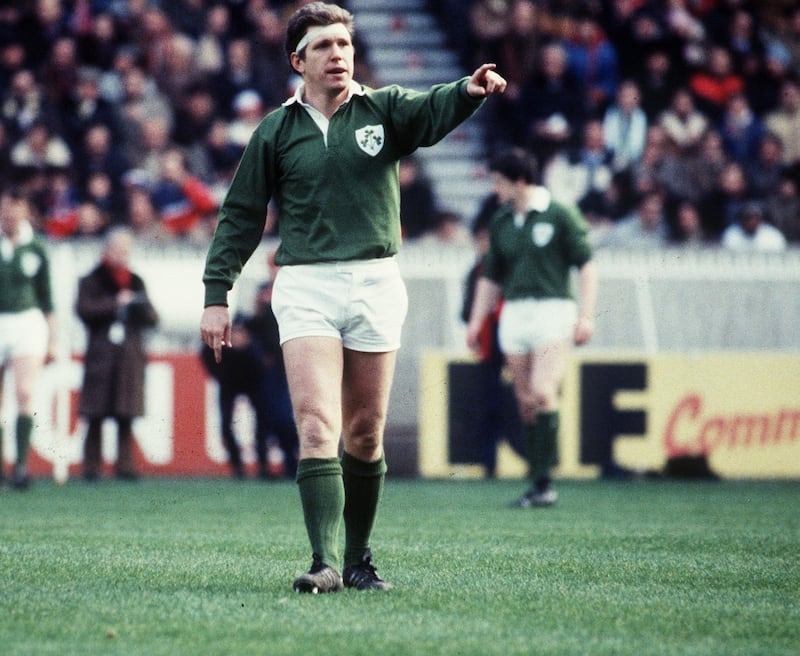
Last week brought sad news. Fergus Slattery, a titan of the game, has left us. While my playing career was short I can say, with no little pride, that I played both against and with the great man. The latter, unsurprisingly, was the more enjoyable of those two experiences.
When injury dictated that I would buy a whistle, our paths inevitably crossed quite often over the years. We knew each other well, but agreed not to use first names on the pitch – an interesting difference to what goes on today.
An oft-expressed opinion is that Slatts was always offside. However, while living tight on the margins, his blistering pace often gave the wrong impression, leaving referees to wonder, “where the heck did he come from?”. Many opponents asked that same question as they hit the deck.
Slatts was not difficult to referee; he was too busy relentlessly hunting down the opposition, tackling ferociously and fairly. In attack, his instinctive awareness of where to be, and where to be next, was unparalleled. He played a key role in ‘Ginger’ McLoughlin’s famous Twickenham try and was close to Gareth Edwards’s shoulder for the try of the century when the Barbarians beat the All Blacks in 1973. He also touched down himself on that never-to-be-forgotten afternoon.
In all my rugby travels, without a single ounce of fear or favour, he was the best number seven I ever came across. And what about nowadays? Well, if he was available to Andy Farrell, Slatts would undoubtedly be one of the first names in the head coach’s starting XV.
For his beloved Margot and family, it is hopefully of some consolation to know the whole world of rugby is with you. With heartfelt condolences. Requiescat in Pace.