
On the day last week when former Stoke and Reading striker Dave Kitson revealed himself as The Secret Footballer, the Gaelic Players’ Association (GPA) launched a document that, in part, dealt with how GAA players interact with the media and its splintered audience. How can they reveal more of themselves without feeling exposed? How can it feel like a safe space?
The Secret Footballer column ran in the Guardian for five years and spawned five books. It was compelling because it took the reader behind a curtain, but also because it allowed Kitson to speak freely about issues that most footballers would recoil from: racism, sexism, fans’ abuse, relationships with managers, self-doubt and other topics that are intrinsically uncomfortable.
Some of the material that appeared in The Secret Footballer column was highly unlikely to pop up in player interviews elsewhere in the sports section. Media access to professional footballers is quite structured, just as it is in other professional sports, but that also bleeds its vitality. In those sterilised settings, the level of engagement has an undeclared cap. Nobody expects the skin to be broken.
There must be a viable middle ground between the freewheeling output of The Secret Footballer and the empty calories of McNugget quotes. In The Playbook, an aspirational document published by the GPA last week, that gulf was acknowledged in other words.
READ MORE


“Increasingly, coverage is driven by short clips, social media commentary or isolated quotes, often removed from their wider context,” the report said. “This environment can leave players feeling exposed and misunderstood, leading many to limit engagement and avoid bringing their full selves to public conversations. At the same time, players often operate within tight controls around when and how they can speak, with management teams understandably cautious about unintended controversy or distraction.”
In this, there is a gridlock of competing needs. The GAA is acutely conscious of holding its ground in a teeming sports marketplace and all the while it feels surrounded. By now, it is a truism to say that the coverage of soccer has reached saturation point, but, by definition, saturation point would be the end of it. Instead, the coverage continues to swell.
In this free-for-all, it is not enough for the GAA to depend on the spectacle of the games. In fleshing out storylines, the actors are as important as the action. Supporters want to feel a vicarious connection. Intrinsically, they want to like people. But to do that, there must be some level of familiarity.

Unlike in professional sports, the GAA has no direct leverage over players. There is no contractual obligation to speak to the media. Some players have arrangements with sponsors that inevitably involve some media exposure, and some players are regularly in demand when a preview event is being staged by an organ of the GAA or one of its commercial partners.
But those interactions are typically in a group setting, with self-censored answers and polite superficiality. None of those interviews is going to cut through the noise. Nobody expects to hear something interesting.
In The Playbook, the GPA makes reference to this dynamic too, recognising “a more guarded media environment, at a time when authenticity and connection matter more than ever”. So how can that be achieved to everyone’s satisfaction?
The relationship between GAA players and the media is more complex than it once was, essentially because the way media is consumed has been transformed by the digital age.
Once upon a time, managers were paranoid about an interview with one of their players appearing in a newspaper on the weekend of a big championship game – when print was the only show in town. It was even something that invaded the minds of supporters: how could they possibility play well when they’ve been plastered all over the paper?
No scientific research was ever done, but that superstition had undeniable traction. It was only ever mentioned, though, when an interviewed player had played poorly, not when they had played a blinder.
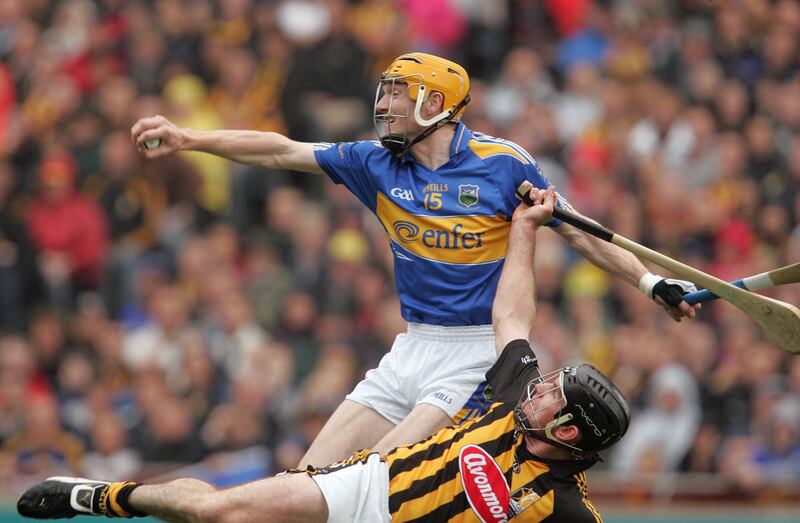
Lar Corbett, for example, appeared in every Sunday paper on the morning of his hat-trick against Kilkenny in the 2010 All-Ireland final, because at the Tipperary press day Corbett had been set aside for a group interview with the Sunday reporters. He chatted amiably for 45 minutes in the Horse and Jockey Hotel 10 days before the final and still played the game of his life.
But the landscape was completely different. There were no websites or podcasts or news feeds on smartphones; there were no social media channels to play host to the kind of base, toxic, excoriating, offensive commentary that would never have made it into print.
When print was king, a newspaper interview would travel by word of mouth. It could still be mangled or misinterpreted in the second-hand relays, but it wasn’t bouncing around an echo chamber on your smartphone.
Managers used to tell players not to read the papers in the week of a match, and maybe managers tell players not to look at social media now, but how realistic is that?
Research conducted by the GPA four years ago found that one in four players had suffered online abuse at some stage of their career, and this number rose to 36 per cent for players in tier-one counties.
But the players were also asked if they had ever trawled social media looking for commentary on their performances and 45 per cent said they had. That trawl for gratification, the research concluded, was mostly among younger players.
The kind of “visibility” that the GPA references in its Playbook document is naturally a multi-media phenomenon. But the aspiration for players to bring “their full selves to public conversations” is the function of longer, more reflective interviews, whether in print or on podcasts or wherever people can sit for a while and chat.
The problem is that the current generation of players have not grown up consuming media in that way. The stuff that flashed up on their phones was just passing through, designed for instant consumption. A nugget of action, a soundbite, something funny, something contentious, something that had gone viral, something that could be shared, something that didn’t merit a second thought.
Unwittingly, and without their consent, GAA players were swept into this blurred continuum of content. Just content, nothing deeper.
In that space, we will never get to know them. In the modern world, creating a different space will be a stretch. It is worth trying.