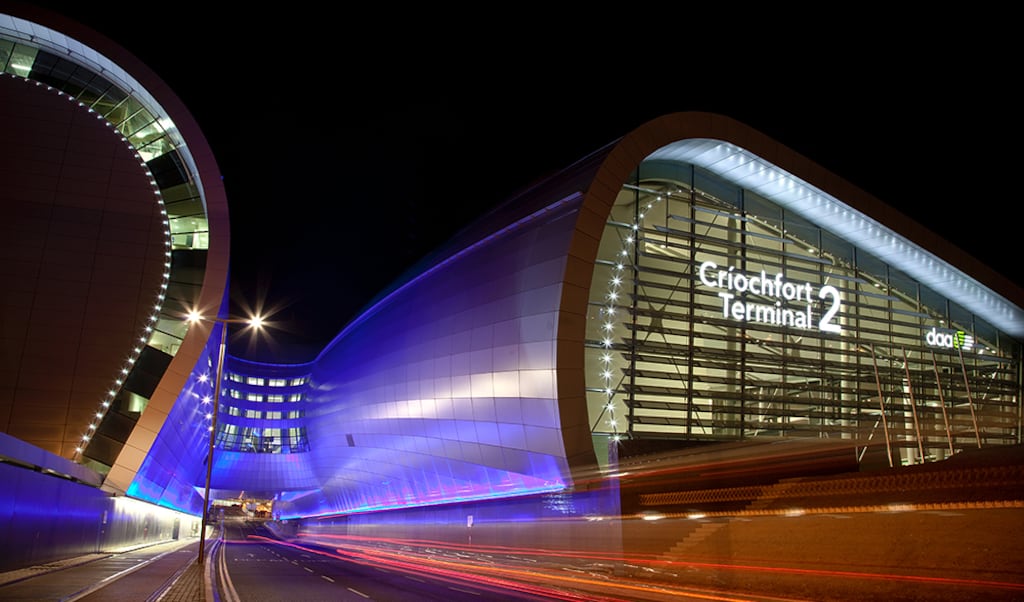
The Cabinet will formally approve lifting Dublin Airport’s 32 million passenger cap on Tuesday, paving the way for as many as 40 million passengers to pass through its two terminals in 2026.
The cap has been in place for almost two decades, having originally been introduced in 2007 over concerns about traffic congestion, among other issues. However, in recent years, the threshold has been breached. More than 36 million passengers passed through the airport in 2025, setting a new record.
Minister for Transport Darragh O’Brien is set to get approval for legislation that will allow him to make an order revoking the 32 million passenger cap, and – in the long run – preclude the airport from maximum passenger numbers.

Are we now seeing a grumpy electorate demanding action?
An advocate general of the Court of Justice of the European Union is due to give an opinion in February on whether the slot limits imposed at the airport arising out of the passenger cap are in keeping with European Union laws.
READ MORE


At the weekly meeting of Cabinet, Minister for Infrastructure Jack Chambers will also tell colleagues he is introducing one of the significant policy measures of his plan to reduce the length of time it takes to complete big projects.
Chambers proposes to make several changes to the infrastructure guidelines that, he says, will cut 20 weeks from the approval process for significant capital projects.
Such projects will no longer require an external assurance process in the early stages of development. It will be replaced by an assessment by the Department of Infrastructure, which must be completed within a strict time deadline.
Critical schemes will no longer need ministerial approval and will be approved by a relevant accounting officer within the Government department.
The Minister also proposes to raise the threshold for what is defined as a significant project in the transport, water and energy sectors from €200 million to €500 million.
Minister for Defence Helen McEntee will unveil plans to publish a new strategic framework for the transformation of the Defence Forces for 2026.
She will set out a programme of reform to strengthen the Defence Forces.
Minister for Finance Simon Harris is also expected to announce that the Living City initiative is being extended from the five cities in the State to some of the larger towns.
Under the scheme, property owners can claim tax relief on the cost of refurbishing or converting residential or commercial buildings.
Until now, it has been available only in Dublin, Cork, Galway, Limerick and Waterford.
Harris now plans to include Athlone, Sligo, Letterkenny, Drogheda and Dundalk.
The Cabinet meeting will also hear a briefing on the performance of urgent and emergency care units over the St Brigid’s bank holiday weekend.
Minister for Health Jennifer Carroll MacNeill is expected to say there has been significant progress compared to the bank holiday period in 2024.
She will also bring an update on the plans to integrate Children’s Health Ireland into the Health Service Executive.
Minister for Arts Patrick O’Donovan will bring a memo on the new permanent basic income for the arts scheme, which is expected to be unveiled later on Tuesday. The scheme has operated on a pilot basis until now.