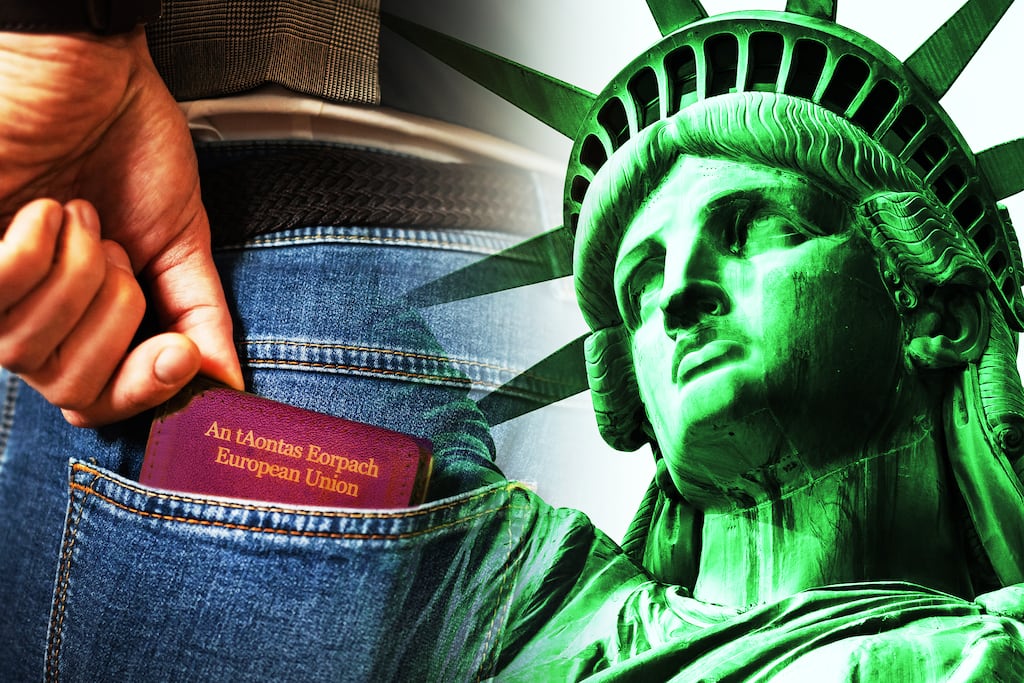

The stories of worried Irish immigrants in the US have moved well beyond the undocumented living in the shadows, as the scope and intensity of US Immigration and Customs Enforcement (Ice) raids has increased.
For some with green cards, or even citizenship, past indiscretions or a foreign surname leave them feeling they need to take daily precautions. For others, US citizens for decades, there is an underlying fear for their communities and despair at a changed America. The Irish Times this week spoke to Irish people living legally in the US about life as an immigrant.
Lately, Fintan* feels “paranoid and powerless” about the possibility of being arrested every time he drives to his tech job or visits his girlfriend.
The green-card holder has a misdemeanour DWI (Driving While Intoxicated) conviction from a few years ago. He is now five years sober.
READ MORE


“I worry that an Ice agent might scan my plates and arrest me, even though my offence is not a deportable one,” he says.
The Irish native moved to the US as a child more than four decades ago, his family having been partly motivated to escape the Troubles, and “now seeing and hearing up close” unrest once again.
He lives in the Twin Cities, Minneapolis–Saint Paul, in Minnesota, where in January, unarmed US citizen Renée Good was fatally shot by Ice officers.
[ Alex Pretti shooting: Minneapolis in the aftermath - in photosOpens in new window ]
Fintan plans to apply for citizenship and get married. But he fears this once-routine matter will attract the “Eye of Sauron”, and the administration will be “looking for a reason to say no”.
His daily life involves checking the crowdsourced Ice raids map. Yet Fintan knows he is luckier than many. “I have the armour of whiteness,” he says. People in his community of Hispanic, Asian or mid-eastern origin are even more fearful. He has noticed their absences at the sports club where he coaches. “People are scared. They are not showing up... They are staying in their houses.”
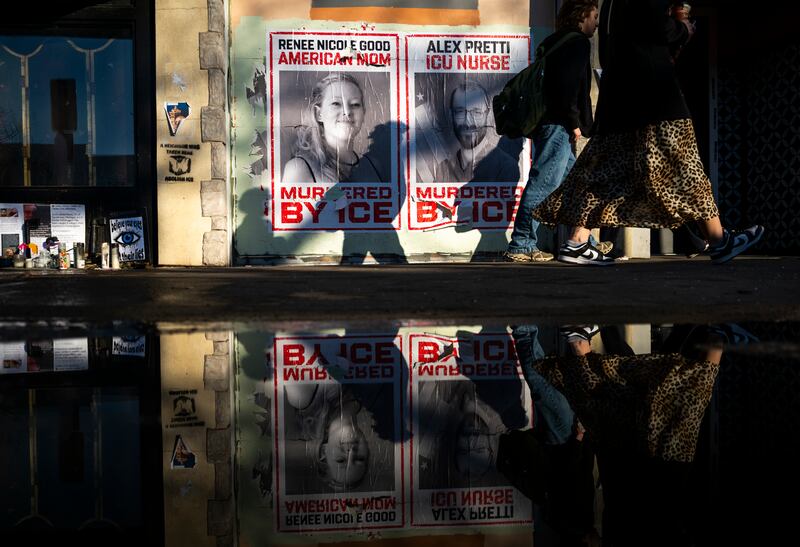
Living in such an atmosphere takes its toll. “It’s hard to concentrate,” he says. Even having regular conversations in a deeply divided society is no longer ordinary. “It’s really hard to talk, especially after [the death of] Renée,” he says. “That sense of losing respect for people you love.”
Yet Fintan draws a sense of hope from protesters “risking their lives” for others. “Minnesotans sure show up when you need them,” he says.
Marie*, a retiree living in the mid-Atlantic region, has started to carry her US passport with her wherever she goes in case she is stopped. She has also begun using a “burner” phone.
She also has an “escape plan, just in case”, and do many in her community, which has a large proportion of Hispanic immigrants and LGBTQI+ residents.
The long-time US citizen moved from Ireland to attend university more than 40 years ago.
“My very white face is now a privilege in this country,” she says, but she feels a sense of exposure from her married Hispanic name.

Her main fear is for her half-Hispanic daughter, who speaks Spanish and English. “I am scared for her every day.”
Marie helps out the Guatemalans and Haitians in her area with law enforcement liaison. “There are a lot of mixed-status families... where the kids are citizens and the parents are undocumented or in the process.
[ How White House unleashed torrent of false claims after woman shot dead by IceOpens in new window ]
“I have heard of people who are one appointment away from getting their citizenship being taken... after five years of holding the green card, the background checks, doing it all the right way.”
Even the annual St Patrick’s Day parade is seen as a potential Ice target, and Marie expects crowds this year to be diminished.
Pub owner Micheál O’Leary has picked up “terrified” Guatemalan kitchen staff for work in recent times. After being “harassed” by Ice, the staff, who have visas to work, had become scared to leave home, says the owner of The Lost Irish Paddy Pub in Nashville.
“One by one they are going after the documented. They know where they work and live and their next court or interview dates [for visas]. It’s a catch 22.″
[ The misogynistic abuse of dying Renee Good is all too familiarOpens in new window ]
O’Leary, who arrived on a J1 in 1987, was later “lucky” to get an amnesty visa, and has no concerns for himself. But he “feels their pain” and has promised staff he will go to court for them if Ice come to the pub door.
A former mayor of Culver City, California, O’Leary says the current administration has motivated him to return to politics. He says he plans to challenge the local congressman in the Republican primary this autumn. “You are totally ineffective if not at the table,” he says.
Ballinasloe native Paul Reynolds also became regularised after living in the US illegally in the 1980s.
The Boston resident feels little sympathy for illegal immigrants who don’t seek to regularise their status. “Americans are law-abiding and hard-working people,” he says.
He feels living illegally can be a “bad start”, with people evading tax or making false statements on forms. Reynolds says when he was illegal, he “never assumed he was entitled to anything”.
US citizen Nuala Carpenter says her “heart breaks” for immigrants caught in Ice raids, especially those from South America. The retired physiotherapist, living in an affluent suburb of Philadelphia, came to the US “very easily” from Ireland in the 1960s, and is married to a US citizen.
Lately she feels an underlying sense of uncertainty. “But still something deep in my stomach doesn’t feel secure. There but for the grace of God go I.”
Carpenter does what she can to protest, such as writing to legislators. She takes solace in her local Unitarian church, where last Sunday people expressed anger and sang We Shall Overcome. “It was powerful,” she says.
Yet the heart of the country she loves has been disrupted. “I never thought I would see this level of insecurity living here in this nation of immigrants. I’ve loved being here with the mix of cultures... So it’s really distressing to see the demonising of immigrants.”
*Some names have been changed to protect people’s anonymity; their identities are known to The Irish Times
- Are you an Irish person in the US concerned about Ice raids? Share your story using the form below or email [email protected].
- Follow us on Instagram to keep up with the latest
- Sign up to The Irish Times Abroad newsletter for Irish-connected people around the world.